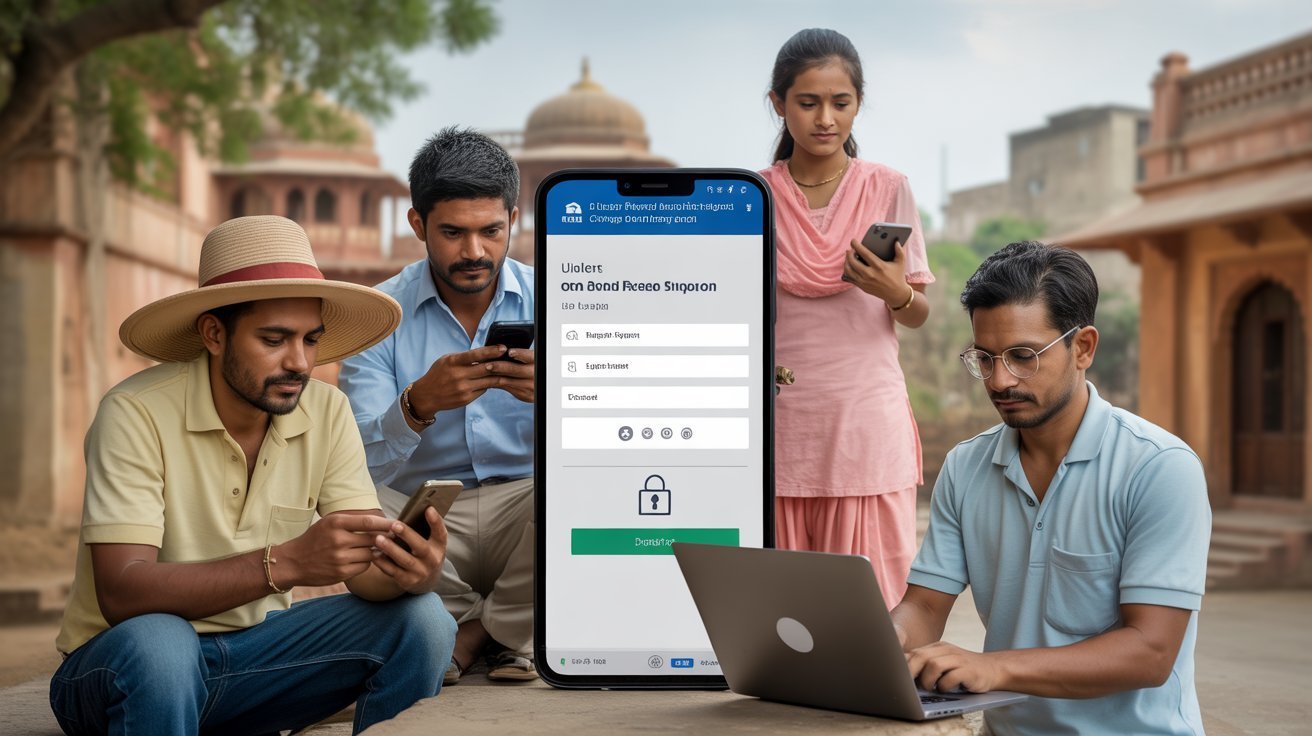
Before digital governance took hold in India, accessing a government service meant picking a specific office, standing in a specific queue, and carrying a specific set of documents, then doing it all over again for the next department. Rajasthan changed that model fundamentally in 2013 when it launched one of the country’s most ambitious e-governance initiatives, a unified digital identity system that replaced chaos with clarity. A decade later, that system has grown into a platform used by millions. Understanding what it is, how it works, and why it matters is essential knowledge for every resident, worker, and business owner in the state.
The Origin and Purpose of the Single Sign-On System
The Rajasthan Single Sign-On initiative was developed and launched by the Rajasthan State Electronics Development Corporation under the direction of the Department of Information Technology and Communication. The driving principle was straightforward: citizens should not have to create separate accounts, remember separate passwords, and navigate separate interfaces for every government department they need to interact with. One verified digital identity should be enough to access everything.
What that means in practice is that a farmer checking on a welfare scheme, a student downloading an exam admit card, a job applicant submitting an application for a state recruitment exam, and a business owner filing for a trade license are all using the same authentication system. They log in once, and the portal recognizes them across every connected service without requiring them to re-establish their identity at each step.
The SSO ID is that identity, a unique alphanumeric username tied to your personal details and verified through a government-issued document. It functions as a universal digital passport within Rajasthan’s public service ecosystem, and once created, it remains permanently associated with your records.
Who It Serves and What It Covers
The portal is built around three distinct user categories, each with its own registration pathway and its own set of accessible services. The largest group is ordinary citizens, who register using documents like Jan Aadhaar, Aadhaar, or a Google account. They gain access to the widest range of services, including utility bill payments, certificate applications through e-Mitra, social security pension schemes, land and property records, Jan Aadhaar management, health scheme enrollment, school admissions under the Right to Education Act, and the state recruitment portal for government job applications.
The second category covers businesses and industries. Entrepreneurs and companies registered under Udyog Aadhaar or holding a Business Registration Number use a separate pathway to access services specific to their operations, including business registration, GST-related processes, industrial clearances, and trade licensing. The portal streamlines what used to be a fragmented, paper-heavy process into a single online workflow.
Government employees form the third category. Using their SIPF number, their State Insurance and Provident Fund credentials, they access a different set of tools designed for internal departmental use, including salary slip management through PayManager, leave applications, performance appraisals, and e-Office services. The portal essentially brings the workplace of a state government employee into a single authenticated environment.
Why This Approach to Governance Works
The logic behind a Single Sign-On system is both practical and far-reaching. From a citizen’s perspective, it eliminates what researchers of digital governance call credential fatigue, the overwhelming burden of maintaining dozens of separate usernames and passwords for systems that serve the same person but never communicate with each other. Before this system existed, a person applying for a government job might need one account for the recruitment portal, another for identity verification, and yet another for payment processing. Those three systems likely had no idea they were dealing with the same individual.
With a unified login, your verified identity travels with you. The portal knows who you are because it has authenticated your credentials once, through a document the government itself issued. That authentication then extends across every integrated service without you needing to prove yourself repeatedly.
From the government’s perspective, the benefits are equally significant. Centralizing access reduces redundant data entry, creates consistent records across departments, and makes it easier to track service delivery. The system also enables the government to send notifications about new schemes, application deadlines, and status updates directly to users, a capability that simply did not exist when citizens were scattered across unconnected portals.
The Broader Significance for Rajasthan
The introduction of this platform marked a turning point for a state that was historically underserved in terms of digital infrastructure. The system now provides access to over 200 e-governance services spanning more than 80 state government departments, figures that represent a remarkable expansion from where the platform began. Tasks that once required multiple visits to different government offices across different days can now be completed from a smartphone in a matter of minutes.
That change is not purely about convenience, though convenience is genuinely valuable. It is also about equity. When a rural resident with limited mobility can renew a document, check an application status, or register for a welfare scheme from wherever they are, the gap between urban and rural access to public services narrows. The platform supports both Hindi and English, and its mobile-optimized design means it functions on the most basic smartphone, not just high-end devices or desktop computers.
For students and young job seekers in particular, the integrated recruitment portal has become indispensable. The One-Time Registration system, which is linked to this platform, allows a candidate to register once and apply for multiple state government examinations without re-entering personal details each time. That alone represents an enormous reduction in the administrative burden that previously fell on applicants during competitive examination seasons.
Security, Trust, and Reliability
A system of this scale only works if people trust it with their personal information. The platform uses SSL encryption to secure data in transit and employs OTP-based two-factor authentication, meaning that even if someone has your password, they cannot access your account without physical access to your registered mobile phone. Captcha verification during login adds another layer of protection against automated intrusion attempts.
The government’s decision to anchor identity verification to official documents, primarily Jan Aadhaar and Aadhaar, rather than self-declared details, means the underlying identity data is as reliable as the documents themselves. This creates a system where fraud is structurally difficult, not just technically prevented.
The portal is free to use at every stage. Registration carries no fee, accessing services carries no fee, and recovering credentials carries no fee. This zero-cost access was a deliberate policy decision, ensuring that financial barriers could never stand between a citizen and the government services they are entitled to.
Getting Started
If you are a Rajasthan resident and have not yet created your login credentials, the registration process takes approximately five minutes with a Jan Aadhaar or Aadhaar card ready. You choose your user category, verify your identity through OTP, create a username and password, and your account is immediately active. That single act of registration opens the door to over a hundred services that previously would have required navigating separate systems for each one.
The Rajasthan SSO Rajasthan Portal represents something worth understanding clearly: it is not just a login page. It is the infrastructure through which an entire state delivers its services to the people who need them, one authenticated session at a time.